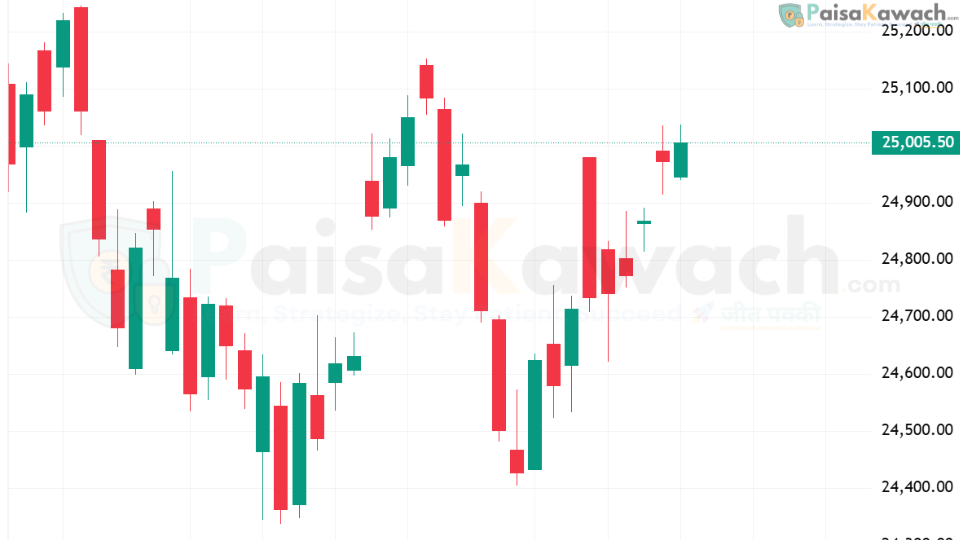
Global markets are rising again on April 22, 2026, driven by an extended ceasefire between the United States and Iran, stabilizing oil prices, and strong corporate earnings. However, this optimism comes with a major warning: the underlying risks have not disappeared.
The biggest takeaway today: Markets look stable on the surface, but the system remains fragile and highly sensitive to geopolitical developments.
After days of sharp volatility, global financial markets are showing signs of recovery. The extension of the ceasefire between the United States and Iran has brought temporary relief to investors, reducing fears of immediate disruption in global oil supply. This has allowed markets to regain some stability and continue their upward momentum.
However, this recovery should not be misunderstood as a return to normalcy. The ceasefire is a temporary measure, and negotiations between the two sides remain uncertain. This means that the risk of renewed conflict still exists, and markets could react quickly to any negative developments.
The current stability is built on expectations, not guarantees. One major headline can change the direction of global markets instantly.
One of the most important factors influencing markets today is the behavior of oil prices. After experiencing significant volatility in recent days, oil prices have started to stabilize as fears of supply disruption ease. This is a positive development for the global economy, as lower energy costs help reduce inflationary pressure and support economic growth.
However, oil markets remain highly sensitive to geopolitical events. Even a small escalation in tensions could lead to sharp price increases, reversing the current trend. This is why energy markets continue to be closely monitored by investors and policymakers.
In simple terms: stable oil supports economic growth, while volatile oil creates uncertainty and risk. This relationship is currently the most important driver of global markets.
Another key factor supporting the market rally is strong corporate earnings. Many companies, particularly in the technology sector, are reporting better-than-expected results. The rapid growth of artificial intelligence and digital infrastructure is driving demand, making tech companies a major force behind market performance.
This shift is significant because it reduces the market’s dependence on traditional sectors such as energy and manufacturing. Investors are increasingly focusing on high-growth industries, which are less affected by short-term economic fluctuations.
The AI boom is acting as a stabilizing force for markets, offsetting some of the negative impact of geopolitical uncertainty.
Despite these positive developments, several risks remain. One of the most important is the possibility of rising inflation. Even though oil prices have stabilized for now, they remain at elevated levels compared to historical averages. This means that inflationary pressures are still present in the global economy.
Central banks are closely watching these developments, as rising inflation could force them to maintain higher interest rates. This would increase borrowing costs, reduce consumer spending, and slow down economic growth.
The balance between inflation control and economic growth is becoming increasingly difficult to manage, especially in a volatile geopolitical environment.
Another important trend shaping the global economy is the restructuring of supply chains. Companies and governments are increasingly focusing on reducing their dependence on geopolitically sensitive regions. This has led to increased investment in local production and regional trade partnerships.
While this improves long-term resilience, it also increases costs in the short term. Businesses have to invest more in infrastructure and logistics, which can lead to higher prices for consumers.
The world is shifting from efficiency-driven globalization to security-driven regionalization — a change that will impact costs, trade, and growth for years to come.
Investor sentiment remains mixed. On one hand, the extension of the ceasefire and strong earnings are supporting market optimism. On the other hand, the possibility of renewed conflict and economic uncertainty is keeping investors cautious.
This dual sentiment is also reflected in the behavior of safe-haven assets. Gold prices are rising alongside stock markets, indicating that investors are hedging against potential risks while still participating in market gains.
This unusual combination highlights the complexity of the current market environment, where optimism and fear coexist.
When both stocks and gold rise together, it usually signals uncertainty rather than confidence — a key indicator of a fragile market.
From a business perspective, the global environment remains challenging. While large corporations are continuing to invest and expand, smaller economies and businesses are facing difficulties due to rising costs and uncertainty.
Currency volatility, fluctuating demand, and geopolitical risks are affecting business confidence in many regions. This uneven impact suggests that the global economic recovery is not uniform and remains vulnerable to external shocks.
Looking ahead, the direction of global markets will depend on several key factors. The progress of geopolitical negotiations, the stability of oil prices, corporate earnings performance, and central bank policies will all play a crucial role in shaping market trends.
For investors, this means staying informed and cautious. While opportunities exist, risks are equally significant, and sudden changes in market conditions are possible.
- Global markets rising on ceasefire extension and strong earnings
- Oil prices stabilizing but remain highly sensitive to tensions
- AI and technology sectors driving market growth
- Inflation risks still present due to elevated energy costs
- Central banks facing challenges in balancing growth and inflation
- Supply chains shifting toward regionalization
- Investor sentiment remains mixed with rising gold prices
- Global economy facing multiple overlapping risks
In conclusion, April 22, 2026, presents a picture of cautious optimism in global markets. While recent developments have reduced immediate risks, the underlying challenges remain unresolved. The global economy is navigating a complex environment where stability is temporary and uncertainty is constant.
Understanding these dynamics is essential for making informed decisions in today’s rapidly changing financial landscape.
stock market today 2026, global markets news April 22, oil prices impact economy, US Iran ceasefire market impact, AI stock market growth, inflation risks global economy, geopolitical impact markets, financial news analysis 2026