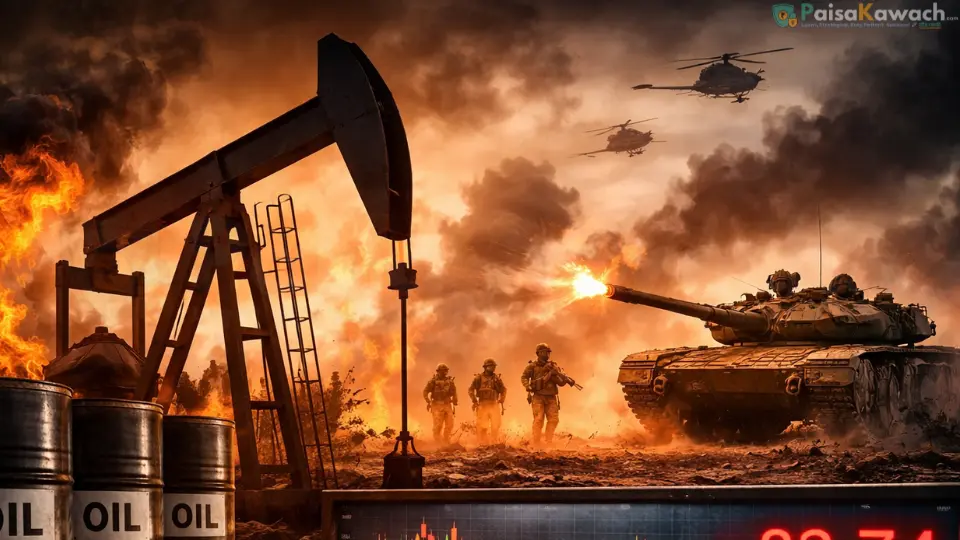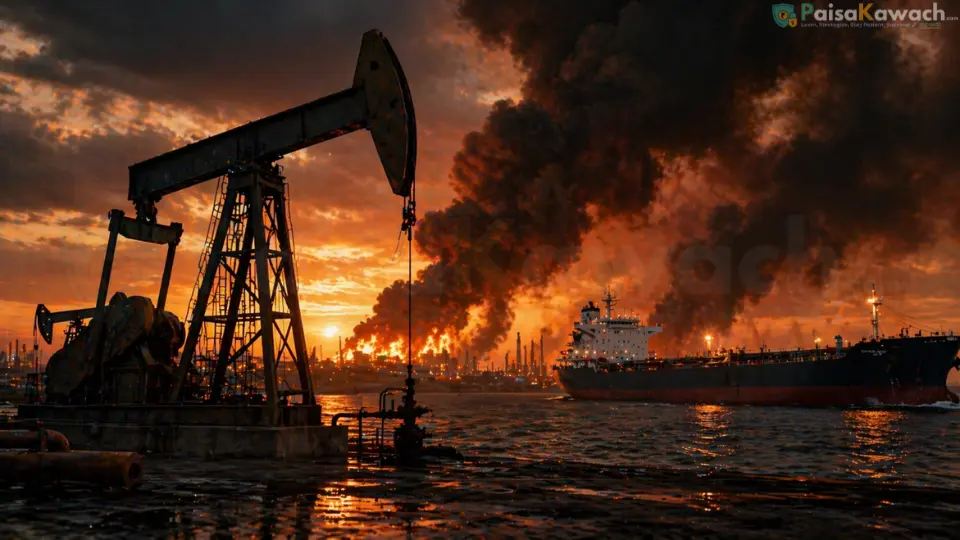
Global markets are under pressure on April 23, 2026, as oil prices surge above $100 again following fresh escalation in the Strait of Hormuz. The situation has shifted from temporary instability to an active global risk event.
The most critical takeaway: Oil is back above $100 — and that changes everything for inflation, markets, and the global economy.
After a brief period of stability, global financial markets are once again facing significant pressure. Renewed tensions in the Strait of Hormuz, including shipping disruptions and stalled diplomatic talks, have pushed oil prices sharply higher. This has immediately impacted investor sentiment across global markets.
The crisis is no longer “possible” — it is already affecting markets, supply chains, and economic expectations in real time.
Oil prices crossing the $100 mark is a major psychological and economic trigger. Energy costs directly influence transportation, manufacturing, and consumer prices. As oil rises, inflation follows — creating a chain reaction across the global economy.
Higher oil → higher inflation → higher interest rates → weaker markets. This is the exact cycle markets are now reacting to.
Global equity markets are already showing signs of weakness. Asian markets have pulled back after recent highs, and investors worldwide are reducing risk exposure. The earlier optimism driven by ceasefire hopes has now been replaced by caution.
The recent market rally is losing strength as real geopolitical risks begin to dominate investor behavior again.
One of the biggest concerns is the impact on global supply chains. The Strait of Hormuz is a critical route for oil and energy shipments. Disruptions here affect not only fuel availability but also industrial production, logistics, and global trade flows.
Businesses are already responding by slowing investments and reassessing expansion plans. Higher costs and uncertainty make long-term planning difficult, especially in energy-dependent industries.
Industries like aviation, shipping, and manufacturing are among the most vulnerable, as they rely heavily on stable fuel prices.
At the same time, inflation risks are rising again. Governments and central banks are facing increasing pressure as energy costs push up prices across economies. This could force policymakers to maintain tighter monetary conditions, slowing economic growth further.
This is no longer just a market issue — it is a full economic pressure cycle affecting households, businesses, and governments.
Currency markets are also reflecting this shift. The US dollar is strengthening as investors move toward safer assets, while emerging market currencies are facing pressure. This indicates a broader “risk-off” sentiment in global markets.
Interestingly, while traditional sectors are under pressure, technology and AI-driven companies continue to show relative strength. Strong earnings and long-term growth potential are helping these sectors resist broader market declines, creating a divided market environment.
This “split market” — where some sectors rise while others fall — is a key sign of uncertainty rather than stability.
Looking ahead, the direction of global markets will depend heavily on developments in the Middle East. Any further escalation could push oil prices even higher, increasing pressure on inflation and economic growth. On the other hand, a breakthrough in negotiations could quickly reverse current trends.
- Oil prices surged above $100 due to Hormuz tensions
- Global markets turned volatile after recent rally
- Inflation risks rising again with higher energy costs
- Supply chain disruptions impacting global trade
- Investors shifting toward safe-haven assets
- Technology sector showing relative strength
- Global economy entering high-risk phase
In conclusion, April 23, 2026, marks a critical moment for global markets. The return of high oil prices and escalating geopolitical tensions has shifted the narrative from recovery to risk. The coming days will be crucial in determining whether this situation stabilizes or intensifies further.
stock market today 2026, oil above 100 impact, hormuz crisis news, global market volatility, inflation oil prices relationship, geopolitical impact markets, financial news April 23 2026